


Rene Haas runs Arm, and his advice this week is simple: the people who build a product are the ones who should make it safe. He told me AI companies are shipping faster than they can get their hands around quality and reliability, and that the fix starts with them, not with everyone else slowing down. Along the way he shared where that instinct came from: a household of scientists, a whiteboard in front of Jensen Huang, and a lesson about writing your own history.
A rocks class in Webster, New York
Rene grew up in Webster, a sleepy suburb of Rochester, as the oldest of three boys. His father was Jewish and fled Nazi Germany as a child. The family bounced across Eastern Europe before landing in Lisbon, which was accepting Jews without visas. His father became a physicist, moved to the United States, and spent his career at Xerox, where he ended up with about 60 patents. His mother, born in Lisbon, had a PhD in romance languages.
The house was full of books, microscopes and photo labs. While other kids played Little League, Rene took geology classes at the museum at age seven. As he put it, his parents did not know how to raise kids in the United States, so he was at a rocks class studying quartz and obsidian. Academics were everything, and he went to Clarkson University rather than a name-brand school.
Rene says, you are whatever you make yourself of.
The whiteboard at NVIDIA
Early in his time at NVIDIA, Jensen Huang asked Rene for a business review. Rene showed up with his product marketing team and a business analyst carrying a spreadsheet. Jensen asked why they were there, said he only wanted Rene, and told him to go up to the whiteboard and talk about his business: the numbers, the products, the competition, the threats.
Rene calls the first attempt a train wreck. He could not remember whether the margin was 28 or 30 percent. The lesson was that if you run a business, you know the facts cold and carry them in your head. Today, when his own team asks what to prepare for a review, his answer is “just bring your brain.” He says it moves the whole company faster.
Break glass, or let history be written for you
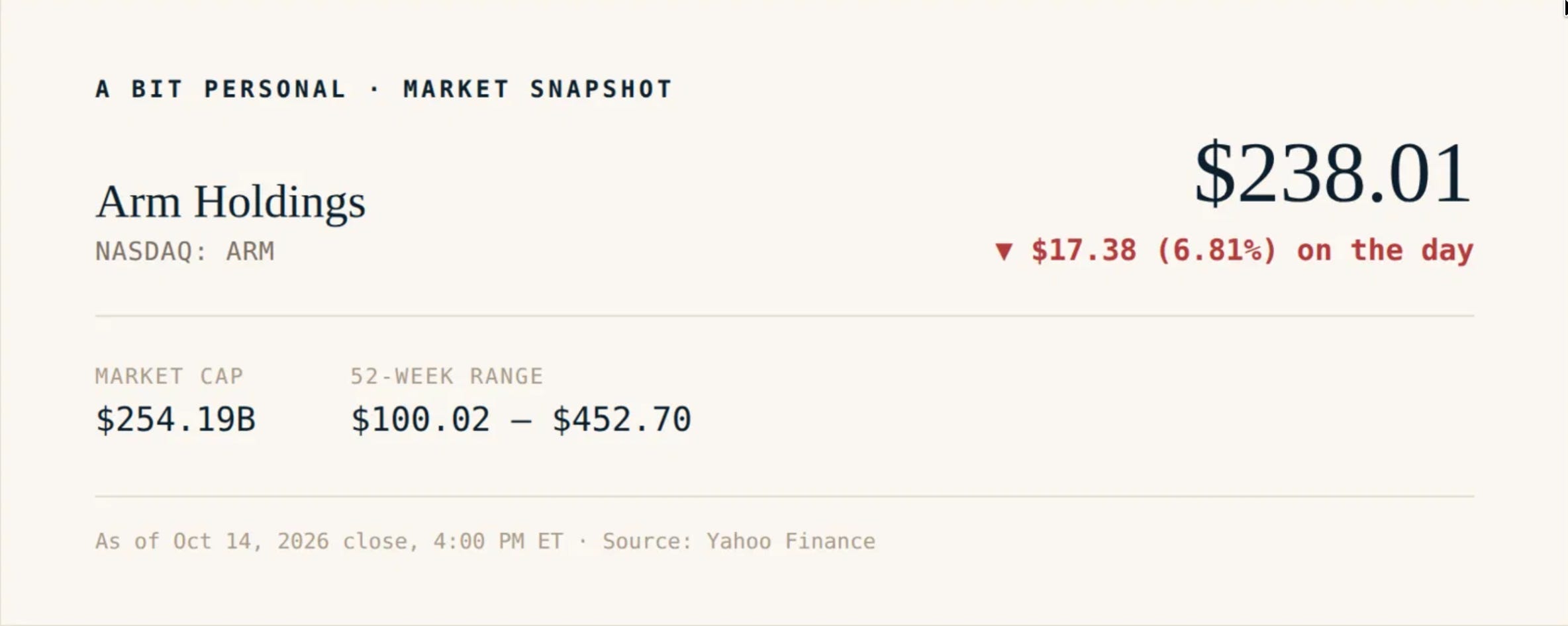
For 35 years Arm licensed its designs and never sold a product of its own. Now it is moving into building its own products, which Rene calls consequential and a real gamble. His reasoning: “if you are not willing to adapt and or cross lines that people would have said before can never be crossed, history will be written for you.”
He grew up between the two biggest companies in his hometown, Xerox and Kodak. Kodak had what it needed to make digital cameras but could not move off film and paper. Xerox had the workstation and the graphical interface years before the Mac. His takeaway: you cannot be bound by “this is what we’ve always been doing.”
The quality problem in AI
I asked Rene whether it is even possible to slow AI down. His answer: “I don’t think it’s wise, and I think it’s possible.” Then he reframed the question. In his words, the leaders developing these products are “basically saying” that their quality and reliability are not good enough, because they are delivering faster than they can get their hands around it.
His engineer’s response: in any other industry, you would not ask the government to police you. You would fix your product. “You know how your products are designed. You know how your products work.” So instead of asking everyone to slow down, he asks why the builders do not slow themselves down.
This is not a pessimist talking. Rene calls himself a techno-optimist. He compares AI to early cars, when there was no driver’s license, no traffic lights and no stop signs, and says we handled that. His rule for today: “Technology companies delivering technology solutions need to own the safety guard bands.”
People watch what you do
When Arm went public at a valuation of about $50 billion, the date was set for a Wednesday, September 13. Rene asked to move it to Thursday, because September 14 would have been his father’s 95th birthday. His father passed away in 2008. In his later years he sat in a recliner watching CNBC from 6 a.m. to 8 p.m., so Rene is sure he would have been thrilled.
On parenting and leading, Rene says the same thing: “People watch what you do. They don’t hear what you say.” He is honest about the cost of his career. He wishes he had spent more time at his kids’ special moments, and he hopes they learned from watching how he worked. What he hopes listeners take away is that a CEO of a company worth about a quarter of a trillion dollars “sounds like a pretty normal guy.”
Try this week:
Before your next important meeting, do Jensen’s test. Close the laptop, grab a blank page, and write down the five numbers that matter most to your work, from memory. Whatever you cannot fill in is what to learn before you walk in.
Keep reading
An Interview with Arm CEO Rene Haas About Selling Chips by Ben Thompson at Stratechery (March 26, 2026). Rene explains why Arm is moving from licensing designs to selling its own chips, which pairs with his “break glass” point. Stratechery may ask you to subscribe.
An Interview with Arm CEO Rene Haas by Ben Thompson (January 11, 2024). An earlier conversation about Arm’s compute subsystems and how the company was thinking about AI before the shift to chips.
How Kodak invented the digital camera in 1975 by Audley Jarvis at TechRadar (2008). Rene’s example of a company stuck on its sacred cow: Kodak engineer Steve Sasson built a digital camera in 1975, and executives were baffled by the idea of looking at photos on a TV screen.
Xerox Alto personal computer is developed at Xerox PARC from computinghistory.org.uk. The other company from his hometown: the Alto pioneered the graphical interface in 1973, and Steve Jobs saw a demo in 1979.
This episode is proudly sponsored by Morgan Stanley.


